

Faculty Startups
Hupside
Hupside is the first company in the world built to fix the AI sameness crisis, the silent force flattening ideas, narrowing innovation, and erasing differentiation across industries. While organizations pour billions into AI tools, 95% still fail to see ROI because they aren’t addressing the most important variable: people. Hupside introduced a new category called Original Intelligence (OI), the measurable human capacity to create ideas that break out of AI’s probabilistic patterns. Backed by scientists and experts from Georgetown University and Washington & Lee University, Hupside’s technology quantifies what AI cannot: the human originality that drives real innovation. In a world where AI makes everything faster but increasingly the same, Hupside ensures organizations can still deliver what wins: ideas that are unexpected and unmistakably human.

Jonathan Aberman is an entrepreneur, investor, and innovation strategist redefining how human potential is measured in an AI-driven world. As co-founder & CEO of Hupside, he is building the Original Intelligence category, which quantifies human originality as a business differentiator. He is also a partner at Ruxton Ventures, supporting high-growth companies through venture investing and technology commercialization. Jonathan previously served as Dean of the School of Business and Technology at Marymount University and is a Visiting Entrepreneur and Strategic Advisor to the Guardini School of Business at John Cabot University in Rome. Named a “Tech Titan” by Washingtonian and recognized among the Washington Business Journal’s “Power 100,” he advises leaders navigating AI transformation while keeping human intelligence at the center.
PushCART THERAPEUTICS
PushCART Therapeutics is a newly-formed spinout from Georgetown University. The company has worldwide, exclusive rights to a portfolio of inventions developed by Dr. Louis Weiner, who served for 18 years as Director of the Lombardi Cancer Center. The company’s technology uniquely addresses a major obstacle in the treatment of solid tumors (e.g., pancreatic, lung, colorectal, etc, comprising 90% of all cancers) – namely the ability of immune cells to penetrate the dense fibrosis (scar tissue) that wall off the tumor. PushCART’s technology also is applicable to a wide range of fibrotic diseases, which together contribute to about 45% of all deaths in Western countries. The company currently expects to be in Ph1 clinical trials by Q2 or Q3 of next year.

UVANTIS Therapeutics Inc.
Uvantis Therapeutics is a biotechnology company developing live biotherapeutic products targeting the urinary microbiome to prevent and treat recurrent urinary tract infections (rUTIs). Growing evidence shows that disruption of the urinary microbial ecosystem contributes to infection susceptibility and recurrence. The company’s lead program focuses on a defined microbial therapeutic designed to colonize the urinary tract and reduce pathogen overgrowth. By advancing microbiome-driven approaches to urologic disease, Uvantis aims to deliver durable, non-antibiotic treatment options that address a major unmet clinical need while helping reduce antibiotic resistance. Company Website
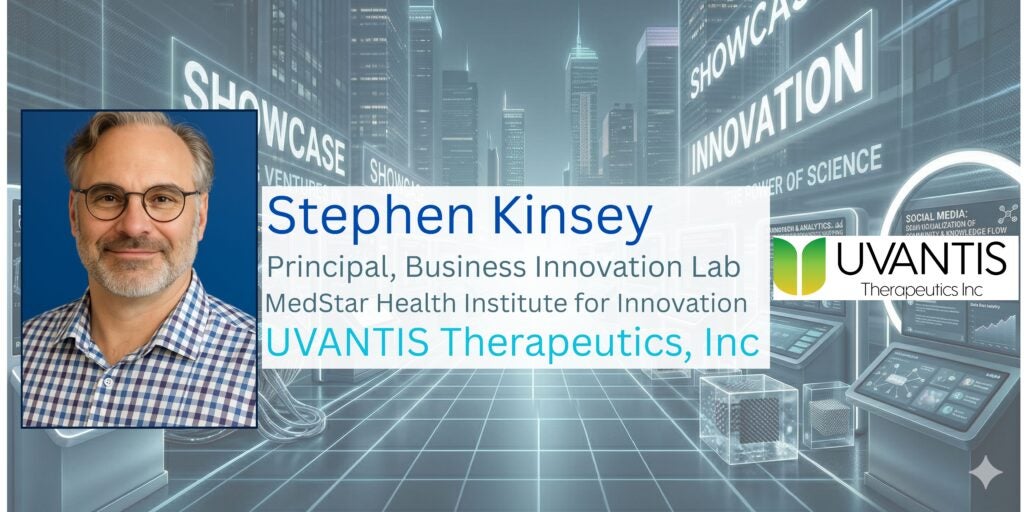
Stephen Kinsey, MS, MBA, is Principal at the Business Innovation Lab, MedStar Institute for Innovation, where he facilitates innovation commercialization, venture development and strategic investment initiatives. His work spans IP-backed startup formation, commercial and technical diligence, and structuring partnerships aligned with MedStar’s transformation strategy across digital health, medical devices, and life sciences. Previously, as Technology Licensing Officer at the Cleveland Clinic and University of Maryland, Baltimore, he’s negotiated more than 30 commercialization agreements and advanced early-stage translational research. His scientific background includes the effects of illicit drug consumption on neurons, and ion channel physiology research at UMB and the National Institutes of Health. Stephen holds a B.S. in Biology, an M.S. in Applied Molecular Biology, and an MBA in Executive Management from Loyola University Maryland.
Bonne Terre Labs
Bonne Terre Labs is a climate and digital infrastructure analytics company building decision-support tools for governments, corporations, and philanthropic institutions. The company develops applied machine learning and data integration platforms that translate complex public and private datasets into actionable intelligence. Its flagship systems analyze funding flows, regulatory trends, infrastructure risk, and environmental impacts to support more transparent and resilient decision-making.
Bonne Terre Labs operates at the intersection of energy systems, data center development, environmental compliance, and capital deployment. By integrating structured and unstructured data into real-time dashboards and forecasting tools, the company helps institutional leaders understand long-term risk exposure, infrastructure stress points, and performance gaps. The goal is practical: strengthen infrastructure planning, improve accountability, and align technological growth with environmental responsibility. Company website

Monica C. Sanders is Founder and CEO of Bonne Terre Labs, a climate and digital infrastructure analytics company building applied AI tools for institutional decision-makers. The company integrates public and private datasets to produce real-time dashboards and predictive models focused on funding transparency, infrastructure risk, and environmental performance.
Sanders brings experience advising federal agencies, philanthropic institutions, and local governments on resilience, compliance, and data strategy. Her work addresses a growing market need: aligning rapid AI and data center expansion with infrastructure capacity, energy constraints, and regulatory accountability.
She is an adjunct professor at Georgetown University Law Center, a National Geographic Explorer, and a Forbes.com Senior Contributor covering climate, technology, and governance. Bio
Nextgen Magnets
Nextgen Magnets is a deep-tech startup dedicated to revolutionizing the magnetics industry through the development of rare-earth-free permanent magnets. Utilizing proprietary technology licensed from Georgetown University, the company is addressing the critical supply chain vulnerabilities and environmental costs associated with traditional rare-earth mining.
Led by a team with deep expertise in materials science and finance, Nextgen Magnets is targeting high-performance applications in Medical Devices, Aerospace, and Defense. Currently, the company is scaling its thin-film magnet technology to meet the rigorous demands of strategic partners like Seagate and Western Digital. By decoupling high-strength magnetism from geopolitical constraints, Nextgen Magnets is building a resilient, sustainable future for advanced manufacturing and global electrification. Company website
Xlue
Xlue, Inc. (xlue.ai), an artificial intelligence focused company, is building health foundation models that empower the entire healthcare ecosystem. By adapting frontier, large language models to real-world medical data, Xlue enables smarter decisions, deeper insights, and safer care across clinical practice.
Built exclusively on patented technology and proprietary medical data, Xlue bridges frontier AI research and real-world healthcare, creating the foundation layer that connects data, compute, and clinical practice.
With deep academic and industrial roots and global clinical partnerships, Xlue is redefining how the healthcare ecosystem leverages trustworthy, explainable, and clinically proven AI to revolutionize medicine. Through their use of Xlue technology, our clinical partners are providing a more-informed, hence better, care for their patient population. Company website
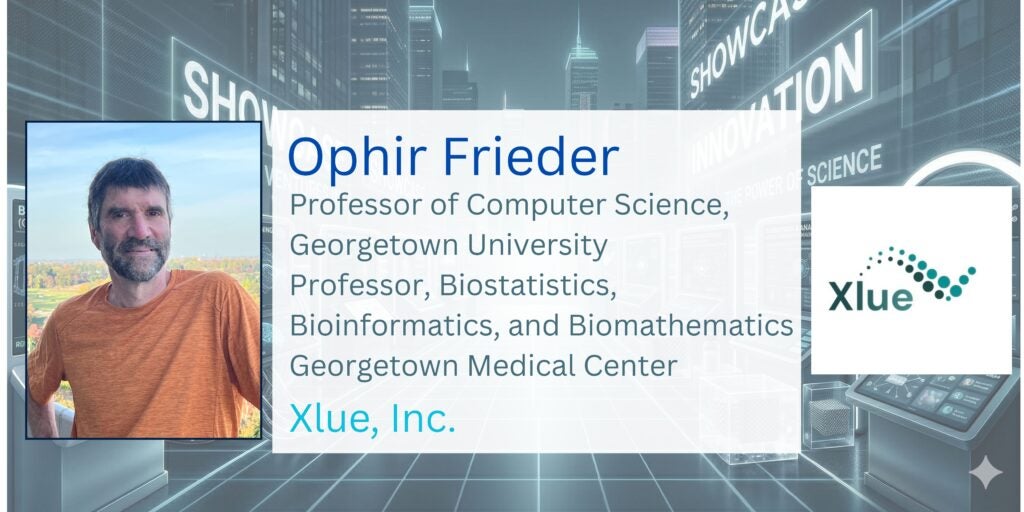
Ophir Frieder focuses on scalable information processing systems with particular emphasis on health informatics. With over 150 issued US patents, he is an inductee of the Florida Inventors Hall of Fame, a Member of both Academia Europaea and the European Academy of Sciences and Arts, a Fellow of the AAAS, ACM, AIMBE, IEEE, and NAI, and an Inaugural Member of the ACM SIGIR Academy and the WIC Web Intelligence Academy. He co-founded multiple startups and serves on the technical advisory boards of several others. He is a member of both the Computer Science faculty at Georgetown University and the Biostatistics, Bioinformatics and Biomathematics faculty at the Georgetown University Medical Center.
Alumni Startups
Sophia Spatial AI
Sophia Spatial AI is pioneering spatial intelligence — AI systems that understand and reason about the physical world. By combining multimodal AI, computer vision, and AR-native interfaces, we transform static enterprise knowledge into real-time, context-aware guidance for frontline workers. Our platform bridges digital information and physical environments to improve training, safety, and operational efficiency across industrial sectors. Company website
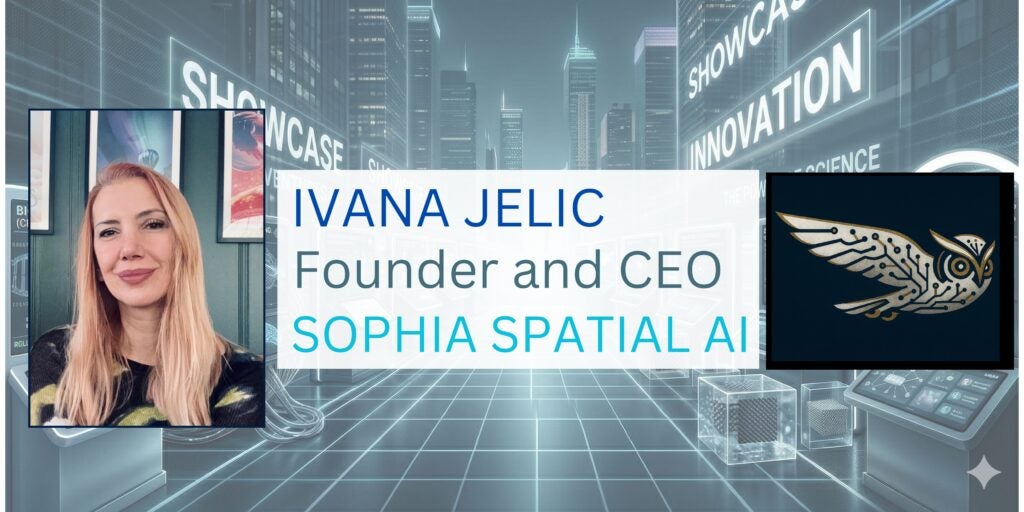
At the forefront of AI-driven innovation, Ivana brings deep expertise in machine learning, spatial intelligence, and data science to Sophia Spatial AI. With over a decade of experience directing AI strategies at major research organizations, she has implemented state-of-the-art methods to advance scientific discovery.
Her background spans natural language processing, computer vision, multi-modal and multi-agent systems, and large-scale data analysis. Ivana now directs the development of Sophia’s core spatial intelligence systems, translating cutting-edge AI research into solutions that connect the physical and digital worlds to deliver wisdom you can see.
PeraWatt
PeraWatt is an advanced materials company redefining energy efficiency in AI data centers, industrial power systems, and electric vehicles by delivering a new class of highly efficient magnetic materials that do not rely on critical minerals or rare earths. Company website

1104Health
1104Health is building the infrastructure for collaborative oncology care. The company’s AI-powered Shared Care Network connects oncologists, clinical trials, and pharmaceutical companies to accelerate patient access to new cancer treatments.
While pharmaceutical companies invest billions to develop oncology drugs, most patients are treated in community settings where physicians lack tools to easily identify trials or coordinate care across institutions. As a result, promising therapies often reach patients far too slowly.
1104Health enables oncologists to collaborate, access education, and coordinate patient care through a digital network. The platform aligns incentives by compensating physicians for professional time spent evaluating trials and treatment options, while providing pharmaceutical companies with scalable infrastructure to support clinical trial awareness and therapy adoption. Company website

Rose Wang is the founder and CEO of 1104Health, and a serial entrepreneur with a track record of building and scaling companies in highly regulated industries. After losing her husband to cancer, she launched 1104Health to fix the broken trial referral system that kept him from life-saving options. A repeat founder with multiple exits in IT consulting and software – including for federal, telecom, and financial services sectors – Rose is also an angel investor, business advisor, and mentor to early-stage startups. She was named one of Fortune’s “Most Powerful Women Entrepreneurs.
Student Startups
Panikcure
Panikcure™ is building an AI-driven Neuro-Decision Intelligence platform to improve decision-making in Central Nervous System (CNS) drug development. Nearly 80% of CNS drugs fail in Phase 2 clinical trials, often due to high placebo response and the lack of objective biomarkers.
By analyzing neural biomarkers such as neuroimaging data, EEG, Panikcure™ aims to distinguish true neural drug effects from placebo noise, enabling earlier and more informed Go/No-Go decisions, reducing costly late-stage failures, while bringing greater precision to neuroscience and supporting the development of more effective neurotherapeutics. Company Website
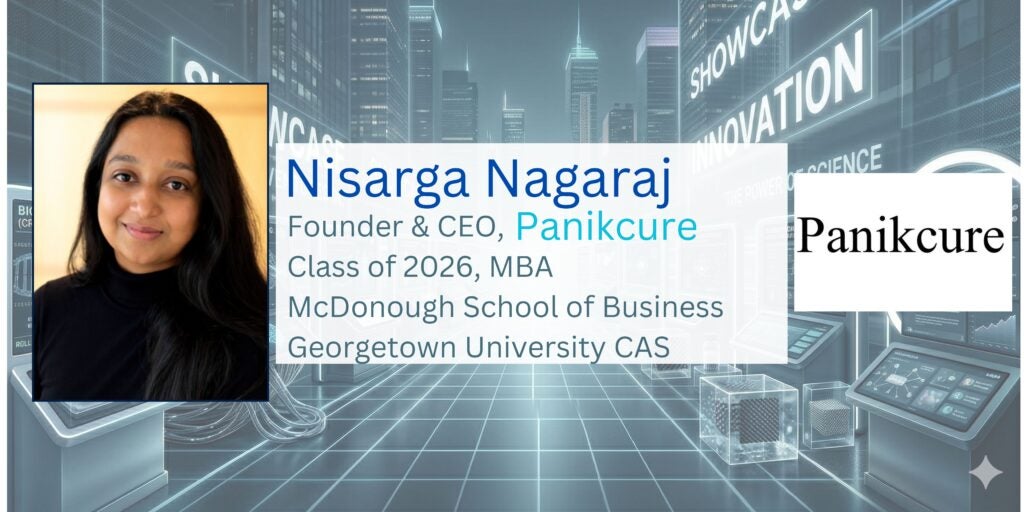
Nisarga Nagaraj is the Founder & CEO of Panikcure™, an AI-driven platform focused on improving decision-making in Central Nervous System (CNS) drug development. She has an engineering background with deep expertise in machine learning applied to medical imaging. Previously, she worked at Siemens Healthineers, contributing to advanced MRI technologies and innovation in imaging systems. Nisarga is an inventor with multiple granted machine learning–based patents across the United States, Europe, and China, reflecting her global impact and technical depth. She is currently pursuing her MBA at Georgetown University, where she is building Panikcure™ at the intersection of AI, neuroscience, and clinical trials, with the goal of reducing drug failure rates and accelerating the development of effective neurotherapeutics.
REviving REsilience ™
Resilience Intelligence for High-Burden, High-Acuity Organizations
REviving REsilience™ is a Resilience Intelligence company building performance infrastructure for high-burden, high-acuity organizations including healthcare systems, military leadership programs, and executive teams.
The company was founded by a neurosurgeon and developed with an economist focused on impact evaluation who met while studying at Georgetown University’s McDonough School of Business, where their collaboration produced a multi-institutional study on burnout and leadership resilience and was recently published in the journal Neurosurgery. Translating insights from functional neurosurgery, behavioral economics, and real-world leadership environments, the team developed a data-driven platform that predicts, measures, and strengthens human performance under sustained pressure.
Through its proprietary RE-DEX™ Resilience Index, adaptive AI RE-scenario training, and structured leadership programs, REviving REsilience™ enables organizations to identify hidden burnout risk, improve decision-making under stress, increase retention of high-value talent, and build resilient teams capable of sustaining peak performance in complex environments. Company Website
Capsy
Capsy is a social photo sharing app where friend groups create shared time capsules for experiences — a spring break trip, a semester, a concert — and unlock them together at the end, seeing all the photos and videos for the first time simultaneously. Because nothing is visible until the reveal, Capsy takes the pressure off in-the-moment sharing, helps people stay present, and makes memories feel worth documenting again instead of getting buried in a camera roll nobody looks at. Launched on the App Store in August 2025, Capsy has secured $20K through Georgetown’s Bark Tank, earned a Forbes feature, and built 85% week-one retention among early users. Apple App Store Link
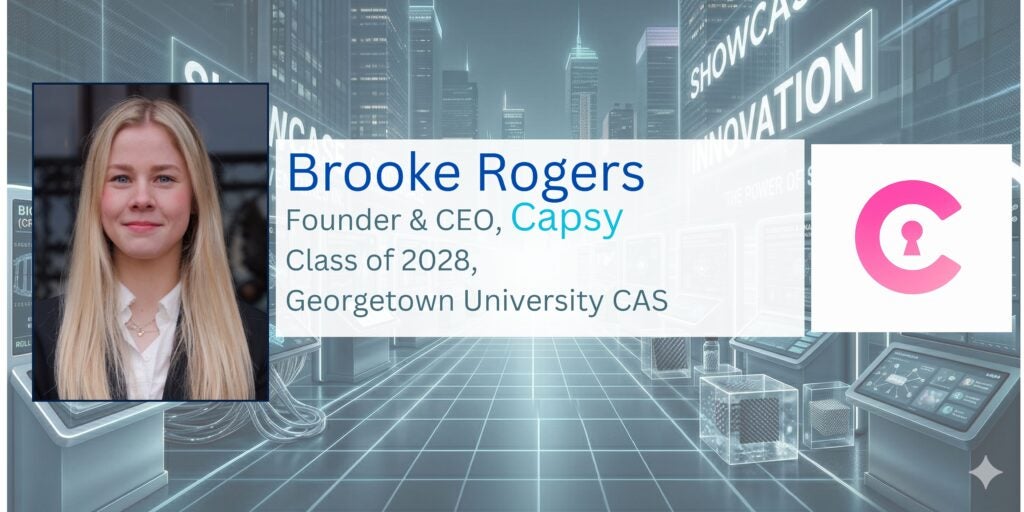
Brooke Rogers is a sophomore at Georgetown University studying Economics. She founded Capsy during her freshman year, building the app solo in React Native and Firebase before launching it on the App Store in summer 2025. Capsy was selected for Georgetown’s Summer Launch Incubator and went on to win $20K at Bark Tank, Georgetown’s student venture competition. Brooke also serves as a Project Manager at Georgetown Ventures and an analyst at Georgetown Student Capital Partners.
The Petition Company
The Petition Company is an AI platform dedicated to protecting democracy by ensuring fair access to the ballot. Our platform helps political campaigns, advocacy groups, and grassroots movements verify and manage signatures on their political petition. Company website
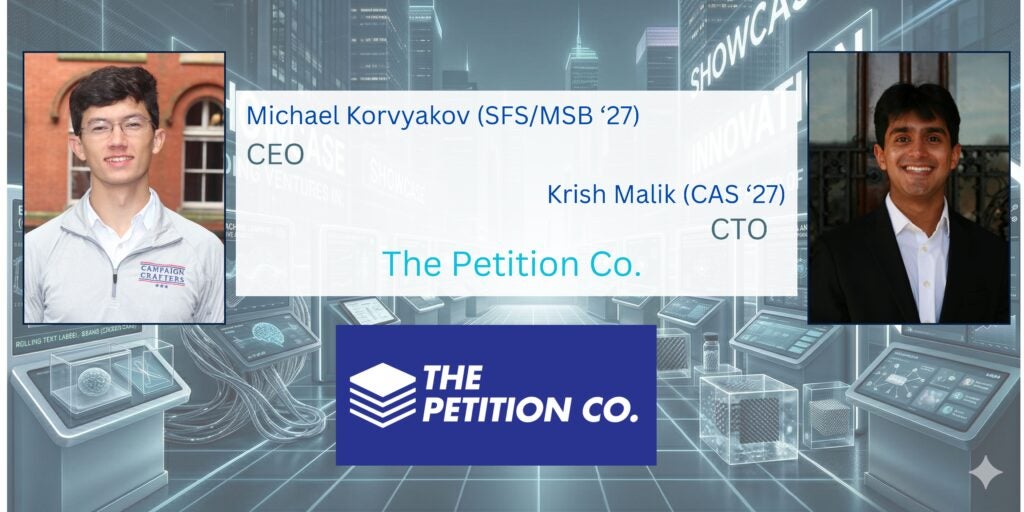
Michael Korvyakov is the CEO of The Petition Co. He has an extensive background in political campaigns and social media. Krish Malik is the CTO of The Petition Co. He is a computer science major, the Director of Software at the Corp (the largest student-run non-profit in the country), and a Tech Consultant at Georgetown Venture.