

We are pleased to welcome our guests and honorees to the 2026 Georgetown University Innovation & Entrepreneurship Awards. The Office of Technology Commercialization and Georgetown Entrepreneurship at the McDonough School of Business have joined forces to combine our respective organizations’ annual awards ceremonies honoring inventors, innovators, and entrepreneurs.
In keeping with the theme of the Research & Innovation Showcase, our Partnerships Power Possibilities. Our progress at Georgetown—and within the larger innovation ecosystem—is fueled by the unique contributions of every individual in our communities.
We sincerely thank all the inventors, faculty, and distinguished guests for joining us today to applaud the collective achievements of Georgetown University’s innovators. We also extend our sincere gratitude to our generous sponsors, whose support has enabled the success of this event.
We look forward to celebrating the spirit of innovation and entrepreneurship at Georgetown University, and to an inspiring year to come.
4 pm Opening Remarks
Welcome
Tatiana Litvin-Vechnyak, PhD
Vice President, Technology Commercialization
Georgetown University
Program Remarks
Spiros Dimolitsas, PhD
Senior Vice President for Research and Chief Technology Officer
Georgetown University
Anna Riegel, PhD
Professor, Senior Associate Dean,
Vice President for Biomedical Graduate Education and Research
Celia Rudman Fisher Endowed Professor of Oncology and Pharmacology
Georgetown University Medical Center
Jeffrey Urbach, PhD
Professor and Interdisciplinary Chair in Science
Department of Physics
Vice Provost for Research
Georgetown University
4:50 pm Closing Remarks
Jeff Reid, MBA
Founding Director, Georgetown Entrepreneurship
HONOREES
OTC Crystal Awards
The Crystal Awards recognize outstanding contributions to the advancement of innovation and technology commercialization at Georgetown.
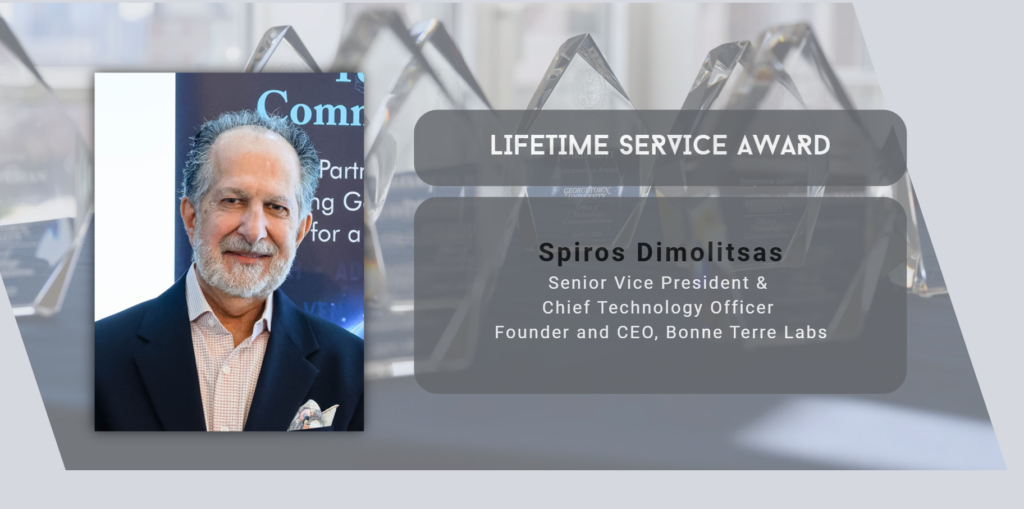
Lifetime Service Award
Spiros Dimolitsas, recognized for his vision and commitment to innovation that will leave a lasting impact on Georgetown University.
Partnership Award
This award recognizes researchers or industry partners whose collaboration around patented inventions shows strong commercialization prospects.
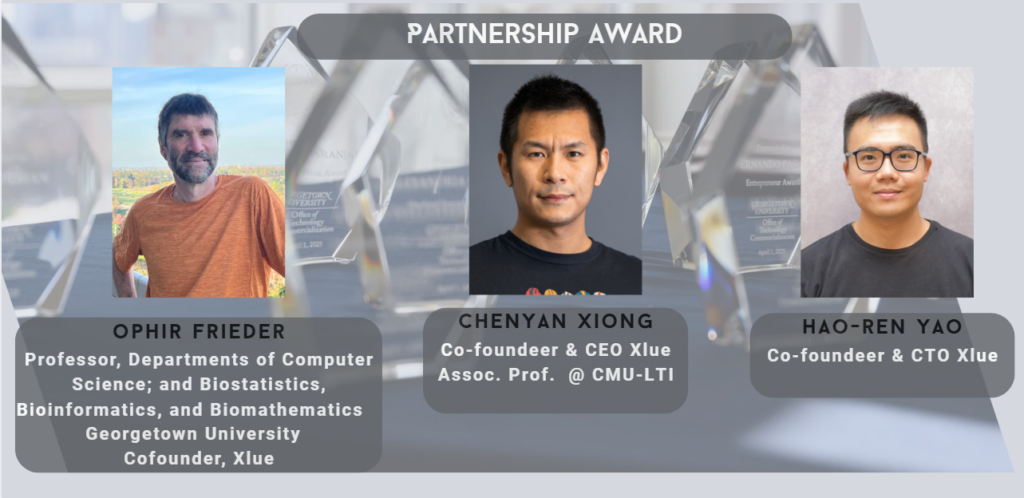
Ophir Frieder, Hao-Ren Yao, and Chenyan Xiong, recognized for their collaboration and role in launching Xlue. Launched in 2025, Xlue focuses on analyzing electronic health records to predict a patient’s likelihood of developing the life-threatening disease. The technology detects patterns in a patient’s health data that statistically resemble records of other patients later diagnosed with cancer.
Commercialization Award
Recognizes a university team/individual that, in collaboration with the Office of Technology Commercialization, has advanced their scholarship or innovation toward real-world impact through licensing, startup formation, publication, or other market-facing pathways.
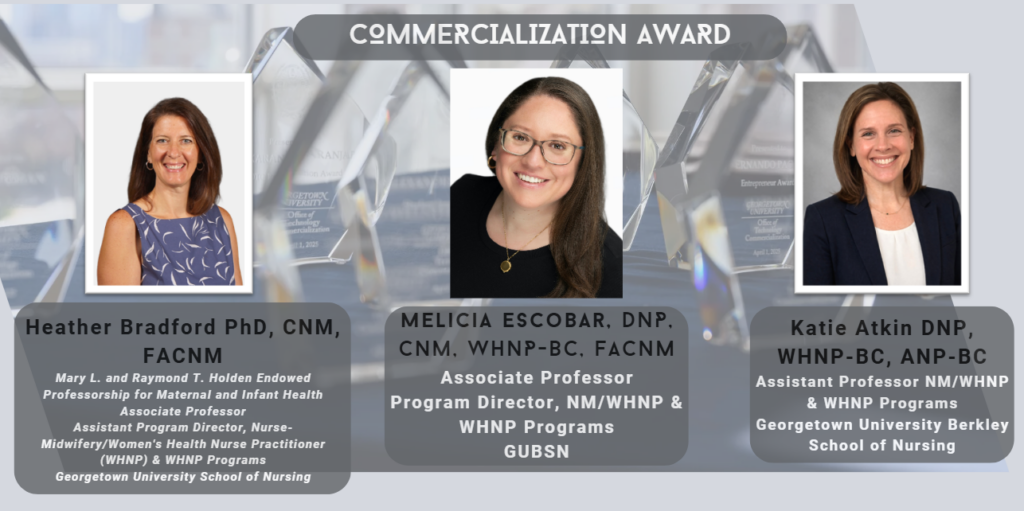
Heather Bradford, Melicia Escobar, and Kathryn Atkin, recognized for their unique commercialization pathway through the creation of a comprehensive test prep resource titled Georgetown Midwifery & WHNP Board Review. Applying the Georgetown University value of cura personalis, or care for the whole person, the book prepares students for both the AMCB and NCC national exams. It takes a holistic approach, with tips for study skills, time management, and self-reflection, as well as actionable steps for a successful study plan.
OTC Recognition Award
Granted to individuals who have made substantial and sustained contributions to the university’s patent portfolio and technology commercialization efforts over their careers.
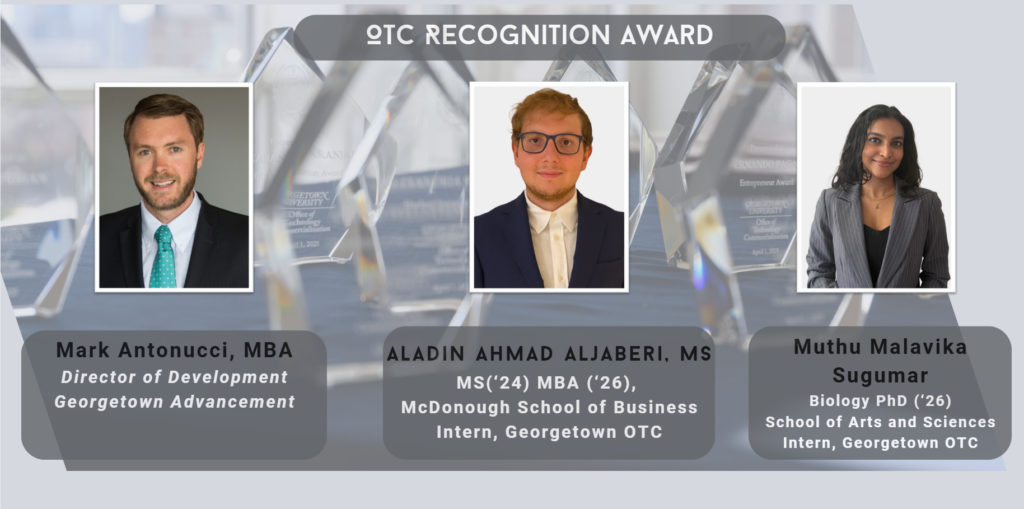
Mark Antonucci, recognized for his transformational contributions over the past several years. Managing and fundraising for the Evergreen Gap Fund, he helped to secure more than $2 million in catalytic research funding that has supported high-potential projects. These activities not only strengthen our commercialization pipeline, but also sustain the institution’s reputation and expand awareness of Georgetown’s research and discoveries for broader societal impact.
Aladin Aljaberi and Malavika Sugumar, recognized for sustained enthusiasm and contributions as Technology Commercialization interns this past academic year. Going above and beyond the typical requirements of the internship, they took the initiative to lead projects in support of OTC and Georgetown Tech Ventures, created training manuals, recruited future cohorts of interns, and helped to plan many events within the regional innovation ecosystem. Their actions helped to spread the spirit of entrepreneurship throughout the Georgetown campus.
Innovator of the Year Award
This award recognizes an individual or a group of individuals whose innovation has made or is poised to make a remarkable impact on society, industry, or academia. This innovation should involve Georgetown intellectual property protected through either patent, copyright, or trademark.
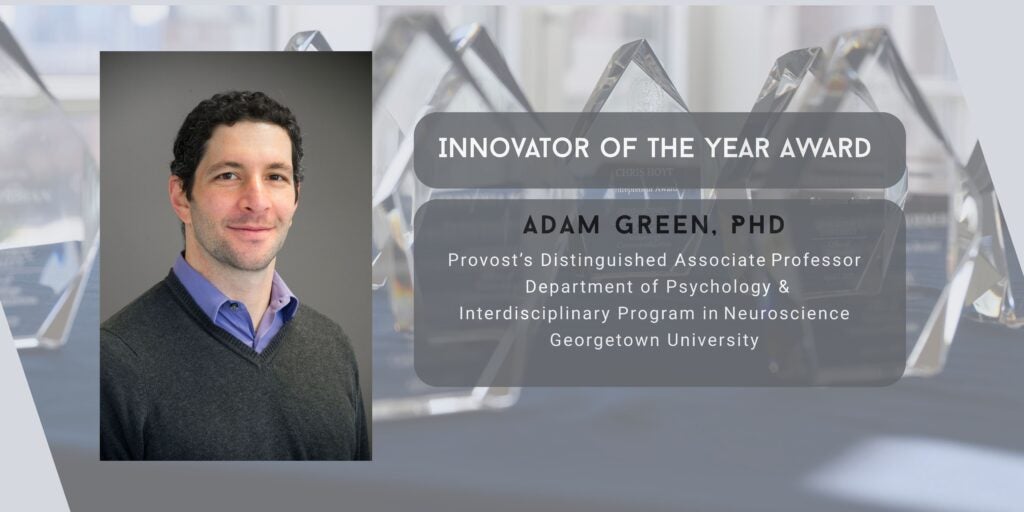
Adam Green, recognized for his innovations in human creative intelligence and especially in understanding how neural processes constitute our best ideas. He cofounded Hupside, which is developing technologies to address this central question: How do we measure the originality that humans add when humans and AI collaborate?
Entrepreneur Award
Recognizes individuals who have launched a spinout based on Georgetown research or technology or played a key role in launching a company based on patented technologies from the university.
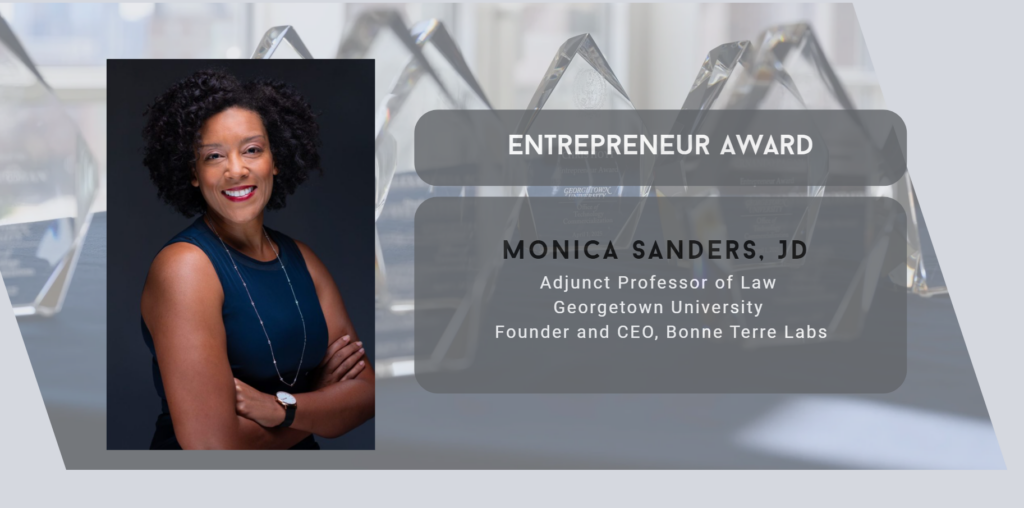
Monica Sanders, recognized for founding Bonne Terre Labs, a company developing technologies for identifying fault lines in the feedback loops between philanthropic organizations, government funding, and community needs, as well as valuable decision-making tools for foundations, NGOs, government agencies, and corporations to evaluate and optimize their investment strategies around social justice and climate action.
Entrepreneurial Excellence Awards
Georgetown Entrepreneurship
The Georgetown Entrepreneurial Excellence Awards recognize members of the Georgetown community who demonstrate exceptional leadership, innovation, and commitment to advancing entrepreneurship. Presented annually by Georgetown Entrepreneurship, the awards celebrate students, faculty, mentors, and community members whose contributions strengthen Georgetown’s entrepreneurial ecosystem.
Rooted in Georgetown’s Jesuit tradition of being people for others, the awards highlight individuals who are not only building ventures and advancing new ideas, but also supporting and uplifting the broader community. Through mentorship, education, venture creation, and ecosystem leadership, these recipients embody the spirit of entrepreneurship in service of the common good.
Outstanding Entrepreneurial Leadership Award
The Outstanding Entrepreneurial Leadership Award honors students who have demonstrated exceptional leadership in advancing entrepreneurship at Georgetown. Through vision, initiative, and a commitment to collaboration, these individuals have played a key role in strengthening the university’s entrepreneurial community and inspiring others to pursue new ideas and opportunities.
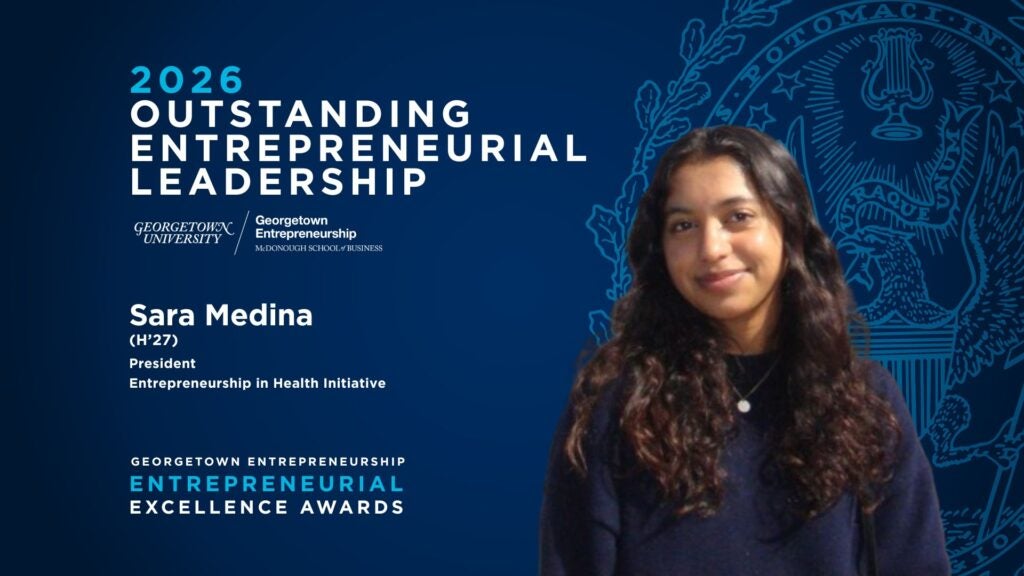
Sara Medina (SOH’27) has made a lasting impact on our community by spearheading the Entrepreneurship in Health Initiative, reflecting her commitment to innovation, inclusion, and community building. She brought students together to pitch innovative ideas, launched new programming with virtual panels and our first South Asian entrepreneurship event.
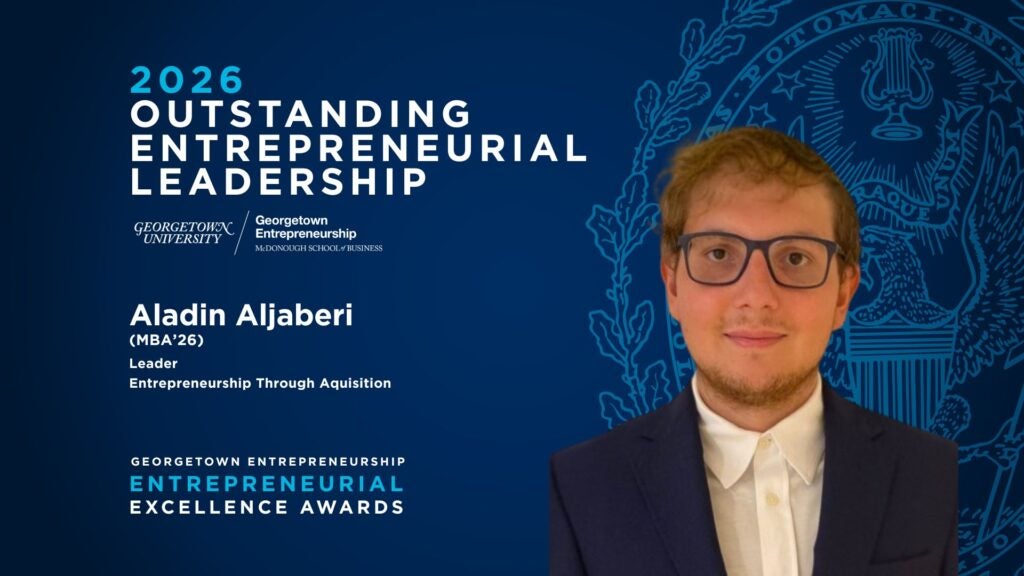
Aladin (Ahmad) Aljaberi (MBA’26) has led across Entrepreneurship in Health, venture capital, and Entrepreneurship Through Acquisition. He has consistently shown up as a reliable leader and support system for fellow students, embodying excellence within Georgetown’s entrepreneurial community.
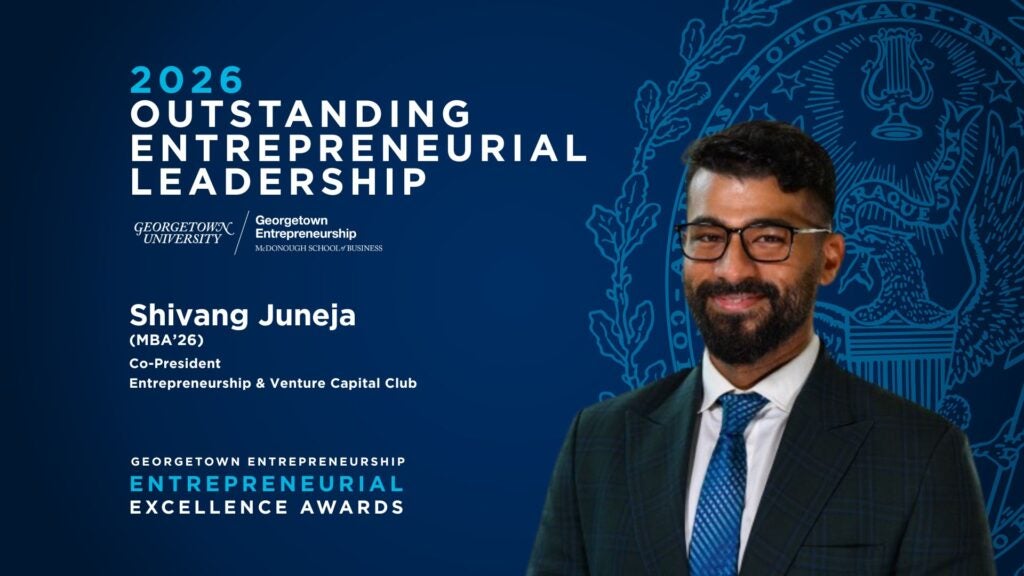
Shivang Juneja (MBA’26) has made a meaningful impact on Georgetown’s entrepreneurial community through his humble, effective leadership as Co-President of the Entrepreneurship & Venture Capital Club, leading initiatives like EVC Career Day and impactful speaker events.
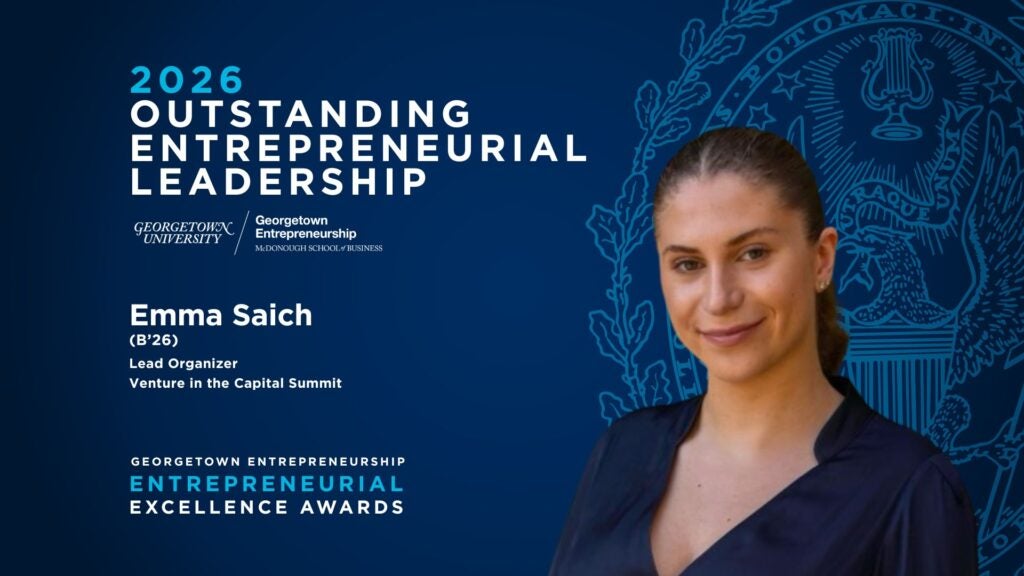
Emma Saich (MSB’26) has demonstrated exceptional dedication to Georgetown’s entrepreneurial community through her leadership of Venture in the Capital, one of our signature events, showing initiative and commitment to supporting fellow students year over year to embody the spirit of leadership that drives the Georgetown ecosystem forward.
Entrepreneurship Faculty Excellence Award
The Entrepreneurship Faculty Excellence Award recognizes faculty members who have made an outstanding contribution to entrepreneurship education at Georgetown. Through teaching, mentorship, and thought leadership, these individuals empower students to think entrepreneurially and help cultivate the next generation of innovators and founders.
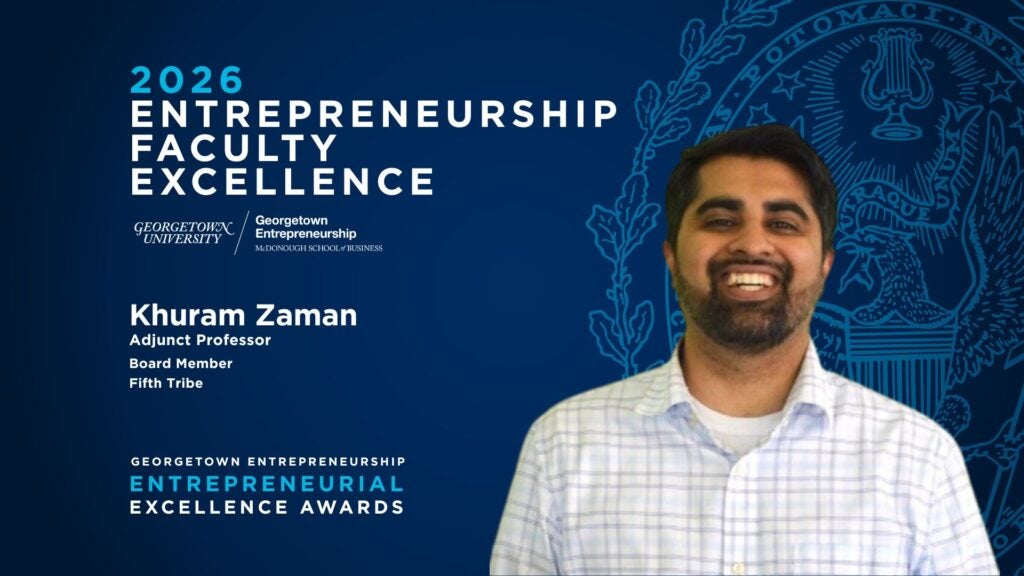
Khuram Zaman has been an invaluable member of the Georgetown Entrepreneurship faculty, bringing real-world digital strategy expertise into the classroom in ways that challenge and inspire students to think boldly about building ventures.
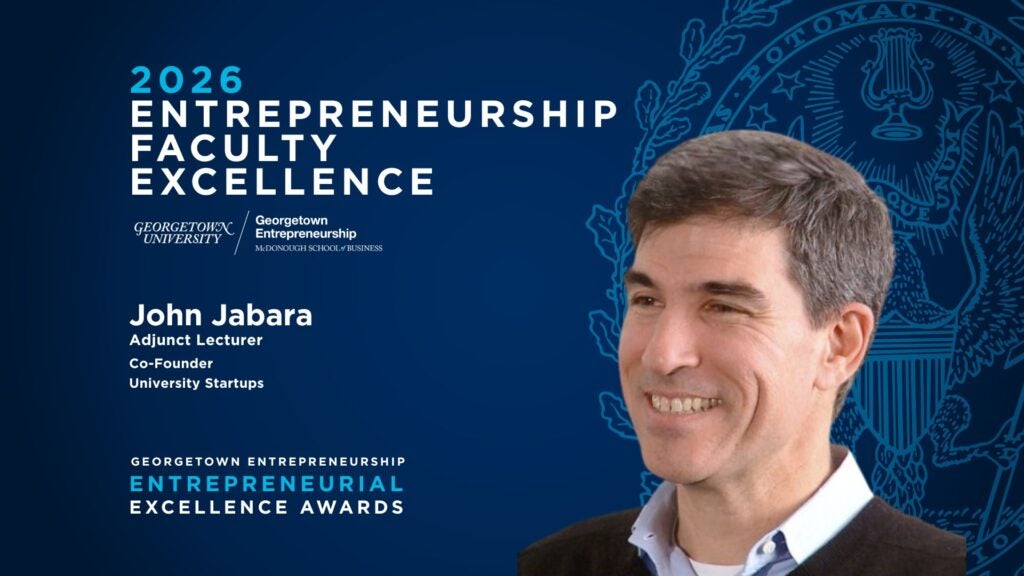
John Jabara has made a lasting mark on Georgetown’s entrepreneurship curriculum, serving as both adjunct professor and curriculum adviser and dedicating himself to ensuring students graduate with the skills and mindset to lead ventures on a global scale.
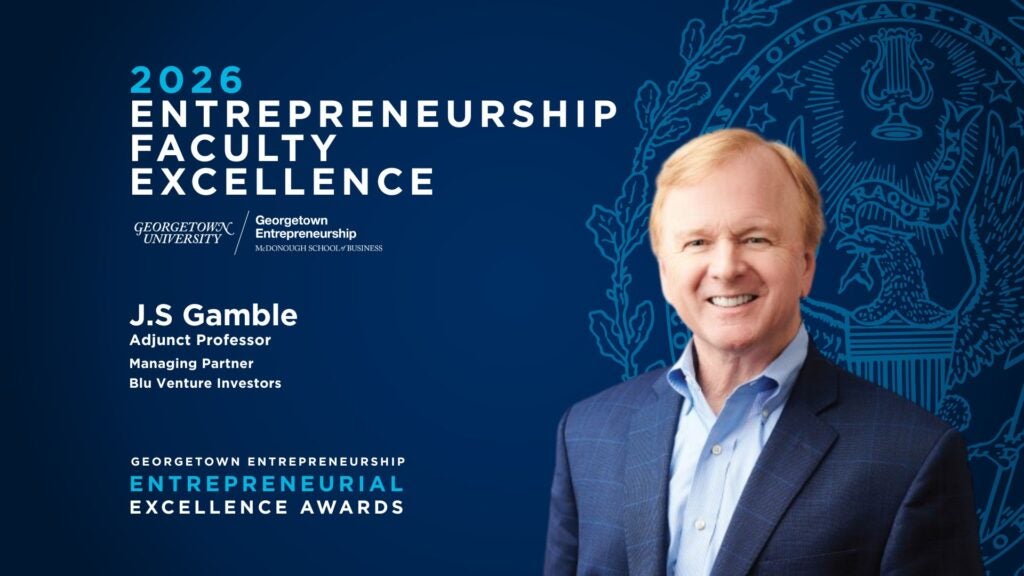
Jaye Gamble has brought an exceptional combination of strategic depth and industry insight to his Georgetown students, consistently earning recognition as one of the most engaging and impactful voices in our entrepreneurship community.
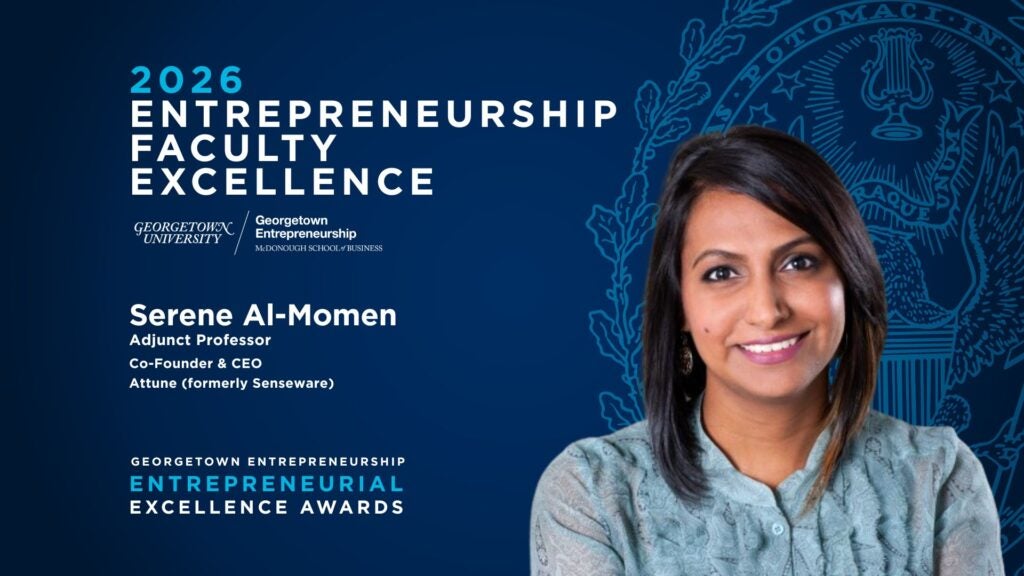
Serene Al-Momen has been a truly inspiring presence in the Georgetown Entrepreneurship program, drawing on her experience as a founder to mentor students with authenticity, empathy, and a passion for turning ideas into impact.
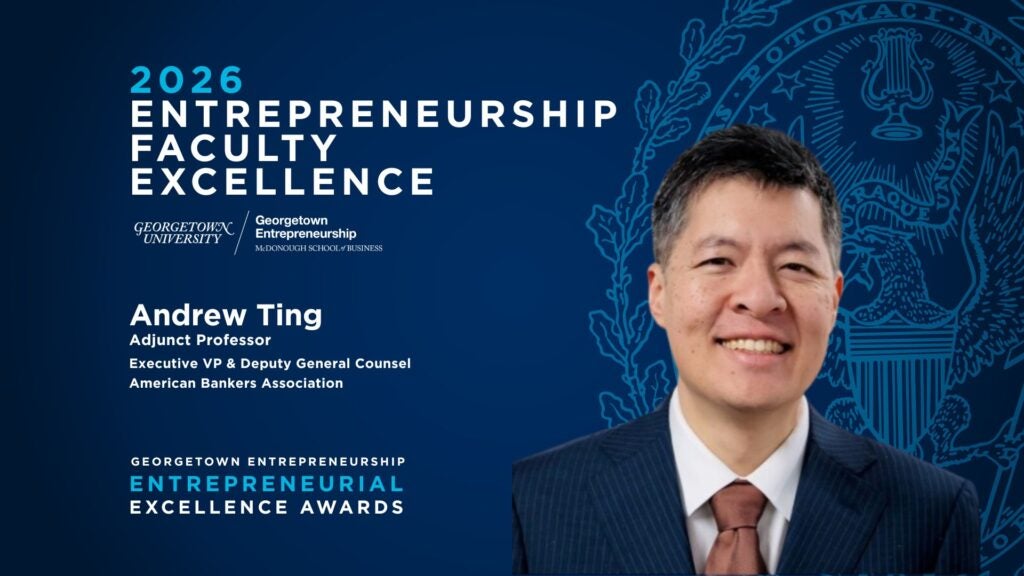
Andrew Ting has become one of the most sought-after instructors in the Georgetown entrepreneurship curriculum with his Startup Law course, reflecting the rare ability he has to make complex legal and strategic concepts immediately relevant to aspiring founders.
Pat Henriques Outstanding Mentor Award
Named in honor of longtime Georgetown mentor Pat Henriques, this award celebrates an individual who has demonstrated extraordinary dedication to mentoring entrepreneurs within the Georgetown community. Recipients exemplify generosity, insight, and a commitment to guiding founders as they develop their ideas and navigate the challenges of building new ventures.
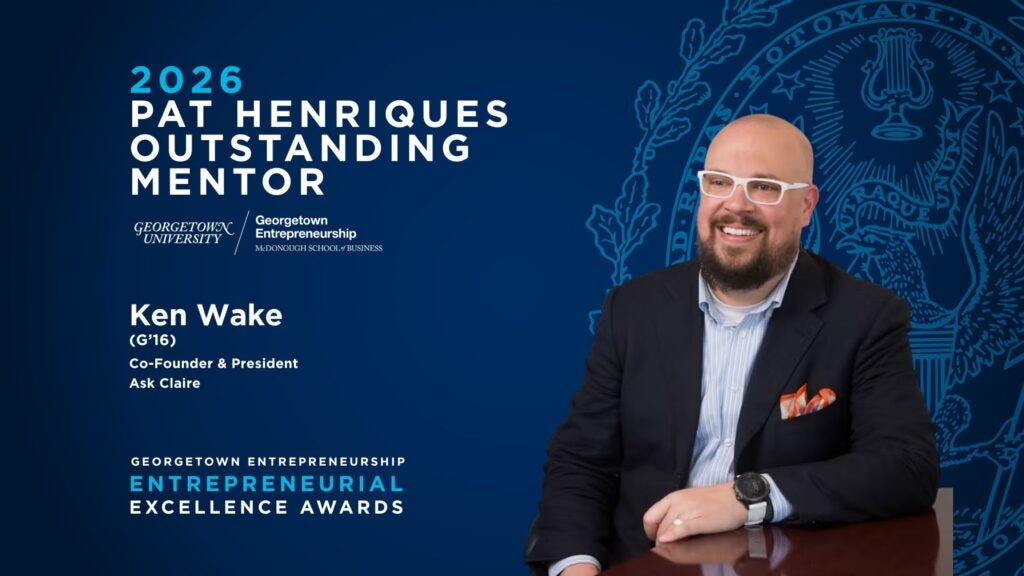
Ken Wake (G’16) has distinguished himself as one of the most dedicated and generous mentors in the Georgetown Entrepreneurship community, consistently logging dozens of hours with students and alumni and leaning into the Venture Development special initiative with the kind of enthusiasm and commitment that truly changes founders’ trajectories.
Outstanding Venture Lab Member Award
The Outstanding Venture Lab Member Award recognizes a member of Georgetown’s Leonsis Venture Lab community who has made exceptional contributions to the program and its entrepreneurial ecosystem. Through active engagement, collaboration, and leadership, recipients play an integral role in strengthening the Venture Lab community and supporting the growth of fellow founders.
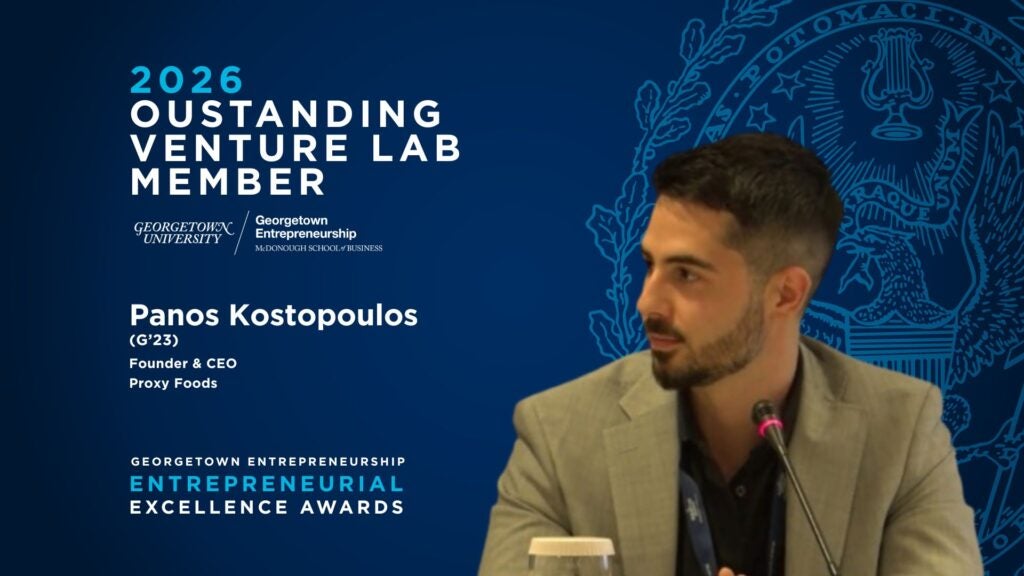
Panos Kostopoulos has distinguished himself as a highly driven entrepreneur, achieving remarkable progress with his venture, Proxy Foods. His dedication, resilience, and impressive entrepreneurial success make him a standout member of the community.
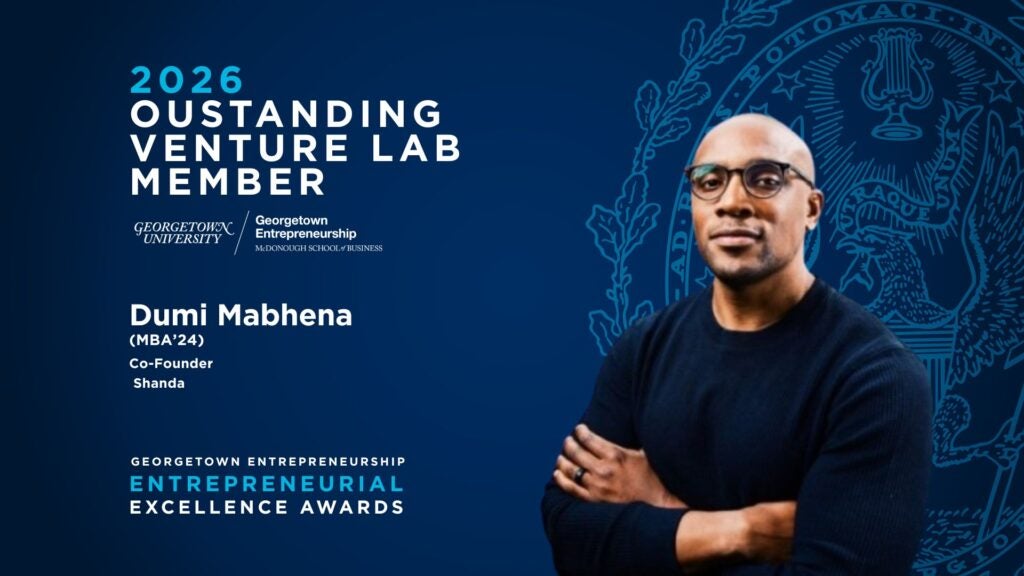
Dumi Mabhena (MBA’24) has been a steadfast and active member of the community, through his hard work and commitment to supporting fellow founders, he exemplifies the values of Georgetown Entrepreneurship and serves as a model for community engagement and dedication.
Student Entrepreneur of the Year Award
The Student Entrepreneur of the Year Award honors a Georgetown student who has demonstrated exceptional initiative in launching or leading a venture. This award celebrates creativity, resilience, and meaningful progress in developing innovative solutions that address real-world challenges. Recipients embody Georgetown’s commitment to common good entrepreneurship, using the entrepreneurial mindset to create positive impact in their communities and beyond.
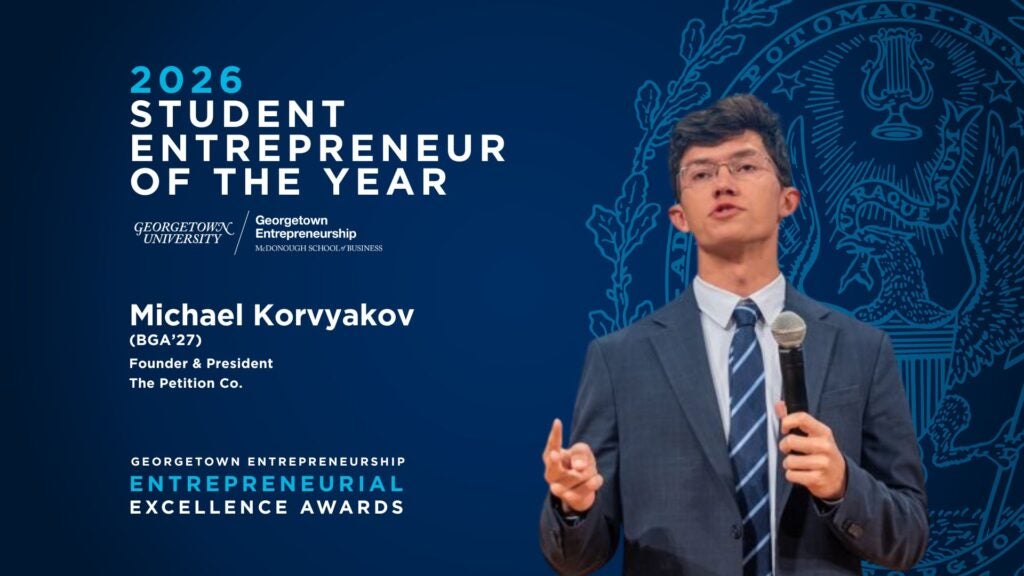
Michael Korvyakov (BGA’27) embodies the entrepreneurial mindset through his innovation and consistent engagement with Georgetown Entrepreneurship programming. Having pitched multiple ventures all addressing critical real-world challenges, he demonstrates creativity, impact, and a commitment to common good entrepreneurship.
Legacy Award
The Legacy Award recognizes an individual whose long-standing contributions have had a lasting impact on Georgetown’s entrepreneurship ecosystem. Through sustained leadership, mentorship, or support, the recipient has helped shape the community and create opportunities for future generations of Georgetown entrepreneurs.
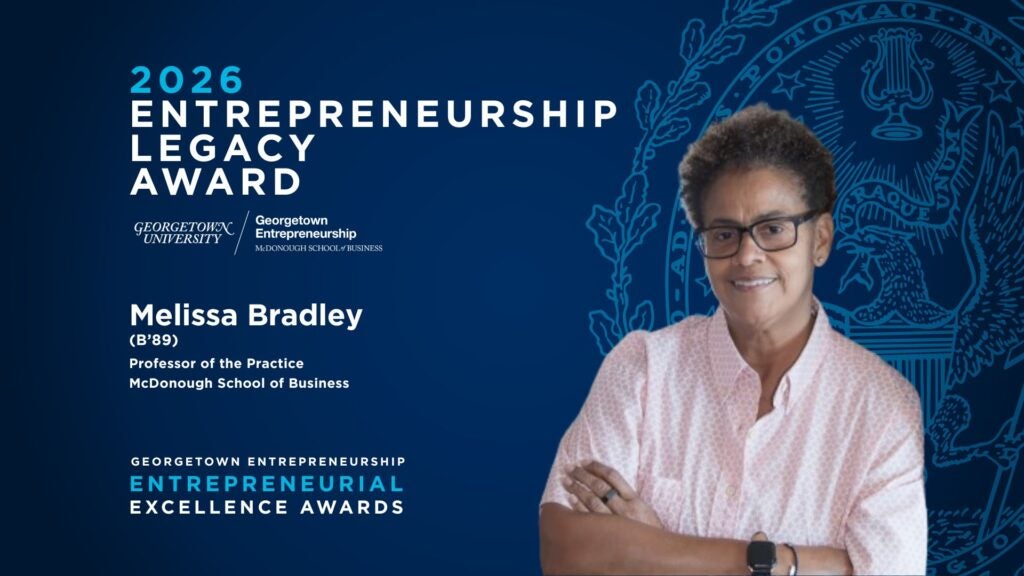
Melissa Bradley (B’89) Since 2012, Melissa has been a Professor of Practice at Georgetown’s McDonough School of Business, building a body of work in impact investing, social entrepreneurship, and innovation that has shaped countless students and left a permanent mark on this program. From the Georgetown Entrepreneurship Alliance Excellence Award for Impact to the John Carroll Award honoring her civic achievements among Georgetown’s global alumni community, Melissa’s legacy here is as rich as it is enduring.
U.S. Issued Patent Recipients FY 2025
We are honored to present patent plaques to Georgetown University inventors who have have secured a parent United States issued patent in the 2025 fiscal year. These individuals’ engagement with our office is critical for the university’s ability to develop a strong pipeline of innovations for broader societal impact.
| Inventors | Ophir Frieder, Ida Mele, Raffaele Perego, Nicola Tonellotto, Cristina-Ioana Muntean, Franco Maria Nardini |
|---|---|
| Title | Caching Historical Embeddings in Conversational Search |
| Patent No. | 12,067,021 |
| Issued Date | August 20, 2024 |
| Description | This invention improves how conversational search systems respond to a sequence of related questions. It stores the mathematical representations of documents that were useful earlier in the conversation, so the system can quickly reuse them for later, similar questions instead of searching the entire database again. By reusing these “ cached” results, the system can answer follow-up questions much faster while still maintaining the same quality of answers. |
| Inventors | Ophir Frieder, Cristopher Flagg |
|---|---|
| Title | Document Search for Document Retrieval Using 3D Model |
| Patent No. | 12,073,646 |
| Issued Date | August 27, 2024 |
| Description | This invention converts pictures or line drawings of an object into a 3D digital model so computers can understand the object’s actual shape, not just its flat images. It then converts that 3D shape into a compact mathematical fingerprint that can be used to find similar objects or related documents much more accurately. Thus, it helps a search system recognize and retrieve items based on what an object looks like in 3D. |
| Inventors | Ophir Frieder, Steven Reese, Mario Gomez Fernandez |
|---|---|
| Title | Method And Apparatus for Real-time Learning-based Augmented Irradiation Control and Optimization |
| Patent No. | 12,106,865 |
| Issued Date | October 01, 2024 |
| Description | This invention uses AI to help operate and optimize a nuclear reactor in real time. It learns from sensor data about how the reactor behaves during normal operation and predicts problems before they occur, allowing the system or operators to adjust controls to prevent shutdowns. By continuously optimizing reactor settings and the placement and timing of materials being irradiated, the system helps maximize the production of important medical isotopes. |
| Inventors | Ophir Frieder, Cristopher Flagg |
|---|---|
| Title | Document Retrieval Using Intra-image Relationships |
| Patent No. | 12,169,518 |
| Issued Date | December 17, 2024 |
| Description | This invention improves how search systems find documents based on the images inside them, rather than relying on simple pixel matching. It breaks an image into meaningful parts (such as objects or regions), converts those parts into mathematical feature vectors, and identifies which parts of the image are most important (“dominant features”). By weighting these dominant features more heavily and comparing them to similar vectors from other images, the system can retrieve documents containing conceptually similar images, even if the images look visually different in style or detail. |
| Inventors | Charbel Elhajj Moussa, Christian Wolf, Balaraman Kaluvu |
|---|---|
| Title | Compositions and Methods for Treating Neurodegenerative, Myodegenerative, and Lysosomal Storage Disorders |
| Patent No. | 12,246,009 |
| Issued Date | March 11, 2025 |
| Description | This invention describes a new class of compounds designed to treat diseases where harmful proteins build up in cells, such as Alzheimer’s, Parkinson’s, and certain rare genetic disorders. The compounds work by blocking specific enzymes in cells and helping the body clear toxic protein clumps, which can protect nerve cells and improve brain function. By reducing these damaging protein accumulations, the therapy aims to slow or prevent the progression of neurodegenerative and related diseases. |
| Inventor | Jill P Smith |
|---|---|
| Title | Treating Non-Alcoholic Steatohepatitis with CCK Inhibitors |
| Patent No. | 12,251,364 |
| Issued Date | March 18, 2025 |
| Description | This invention describes a novel way to treat non-alcoholic steatohepatitis (NASH), a serious liver disease caused by fat buildup and inflammation in the liver. The method uses drugs that block CCK receptors, proteins in the body that respond to the digestive hormone cholecystokinin. By inhibiting these receptors, the treatment can reduce liver inflammation and scarring, improve liver function, and potentially prevent liver cancer. |
| Inventors | Esther H. Chang; Sangsoo Kim; Joe B Harford |
|---|---|
| Title | Methods for Reducing Side Effects of Immunotherapy |
| Patent No. | 12,274,784 |
| Issued Date | April 15, 2025 |
| Description | This invention provides methods to overcome the current limitations of immune checkpoint immunotherapy to provide more effective methods of treating cancer. In embodiments this invention provides a means of using of p53 gene therapy to augment immune checkpoint inhibition by combining antibodies targeting immune checkpoint molecules with SGT-53, a nanomedicine carrying a plasmid encoding human wild-type p53. |
| Inventor | Wanxing Cui |
|---|---|
| Title | Methods and Compositions for Cell Transplantation |
| Patent No. | 12,311,078 |
| Issued Date | May 27, 2025 |
| Description | This invention describes a new method for transplanting therapeutic cells into the body so they survive and function better. A small sealed pocket is created on the surface of an internal organ, such as the liver, by attaching a decellularized biological membrane to the organ’s surface. A mixture of target cells and support cells is then placed inside this pocket. The approach can be used for many types of cell therapies such as transplanting insulin-producing islet cells to treat diabetes, or other specialized cells to repair damaged organs. |
| Inventor | Kaveh Jorabchi; Joseph Lesniewski; Kunyu Zhang; Samuel White |
|---|---|
| Title | Apparatus and Methods for Detection and Quantification of Elements in Molecules |
| Patent No. | 12,322,584 |
| Issued Date | June 03, 2025 |
| Description | This invention describes a new analytical method for detecting and measuring specific elements in chemical compounds. The method breaks molecules apart in a plasma, then uses ions from a separate ion source to convert the resulting atoms into charged particles that can be detected by a mass spectrometer. This approach improves sensitivity and accuracy, especially for difficult elements like fluorine, chlorine, phosphorus, and sulfur, and can be used to analyze complex chemical, biological, pharmaceutical, or environmental samples. |
| Inventor | Mark P Burns; Jeff Debad; Joshua Gatson; Arianna Biesso |
|---|---|
| Title | Genetic Marker and/or Biomarkers for Traumatic Brain Injury Ultrasensitive Assays for Biomarkers of Traumatic Brain Injury |
| Patent No. | 12,339,275 |
| Issued Date | June 24, 2025 |
| Description | This invention describes new assays to detect and measure biomarkers for traumatic brain injury. The use of ultrasensitive detection methods allows for the detection of apolipoprotein 4 and glial fibrillary acidic protein at extremely low levels enabling detection of sub-concussive injury. The invention also enables the potential of early detection of brain injury due to TBI. |
U.S. Issued Patent Acknowledgement FY 2025
We also honor and acknowledge Georgetown inventors with other United States patents that were issued in the 2025 fiscal year.
| Inventor | Astrid Baege; Dan-Paul Hartmann; Richard C Schlegel |
|---|---|
| Title | Use of Artemisinin for Treating Tumors Induced by Oncogenic Viruses and for Treating Viral Infections |
| Patent No. | 12,128,024 Continuation Patent |
| Issued Date | Oct. 29, 2024 |
| Description | The invention provides methods for treating proliferative cervical disorders, including cervical cancer and dysplasia, as well as viral infections, through the administration of artemisinin-related compounds. Specifically, the invention relates to the use of these compounds to treat oncogenic virus-induced tumors, inhibit squamous cell carcinoma growth, and suppress viral replication. |
| Inventor | Ophir Frieder; Hao-Ren Yao; Der-Chen Chang |
|---|---|
| Title | Method and System for Assessing Drug Efficacy Using Multiple Graph Kernel Fusion |
| Patent No. | 12,211,623 Continuation Patent |
| Issued Date | January 28, 2025 |
| Description | This invention describes a computer-based method for predicting whether a drug will be effective for a specific patient. The system analyzes patients’ electronic health records by representing their medical histories as graphs of medical events over time. Using machine learning and multiple graph-based similarity models, it estimates the probability that a drug or treatment will succeed and helps identify the most effective treatment option for an individual patient. |
| Inventor | Makarand Paranjape; Shruti Paranjape |
|---|---|
| Title | Apparatus and Method for Delivery of Antimicrobial During a Transdermal Sampling and Delivery Process |
| Patent No. | 12,295,729 Divisional Patent |
| Issued Date | May 13, 2025 |
| Description | This invention describes a computer-based method for predicting whether a drug will be effective for a specific patient. The system analyzes patients’ electronic health records by representing their medical histories as graphs of medical events over time. Using machine learning and multiple graph-based similarity models, it estimates the probability that a drug or treatment will succeed and helps identify the most effective treatment option for an individual patient. |
Georgetown University Invention Disclosers
We applaud the many inventors who submitted disclosures to the Office of Technology Commercialization in the 2025 fiscal year, demonstrating a commitment to advancing innovation. We encourage them – and all members of our community – to continue sharing their inventive ideas with our office. By fostering a consistent flow of innovative concepts, we collectively contribute to cultivating a robust culture of innovation at Georgetown University.
| Inventor | Department |
|---|---|
| Marwa Afifi * | Oncology |
| Stella Alimperti | Biochemistry and Molecular and Cellular Biology |
| Hakima Amri | Pharmacology and Physiology |
| Matthew Biel | Pediatrics |
| Shaun Brinsmade | Biology |
| Mark Burns | Neuroscience |
| Lee Campbell | Neuroscience |
| Amrita Cheema | Oncology |
| Ghazaul Dezfuli | Pharmacology and Physiology |
| Matthew Edwardson | Neurology |
| Jordan Everson | Medicine |
| Yunhan Gao | Neuroscience |
| Trwska Ghafoor | Pharmacology and Physiology |
| Cecil Han | Oncology |
| Neal Horen | Pediatrics |
| Kemak Ihemelandu | Surgery |
| Priyanka Joshi * | Biochemistry and Molecular and Cellular Biology |
| Kenneth Kellar | Pharmacology and Physiology |
| Yoontae Kim | Biochemistry and Molecular and Cellular Biology |
| Sylvere Krima | Physics |
| Frederic Lemieux | School of Continuing Studies |
| Yousef M. Aljohani | Pharmacology and Physiology |
| Emily Mendenhall | Walsh School of Foreign Service |
| Charbel Moussa | Neurology |
| Nariman Nezami * | Radiology |
| Pinaki Panigrahi | Pediatrics |
| Rahul Patil | Biochemistry and Molecular and Cellular Biology |
| Monica Sanders | Georgetown Law School |
| Mukul Sherekar | Biochemistry and Molecular and Cellular Biology |
| Shekahr Shinde | Chemistry |
| Baldev Singh | Oncology |
| Jill Smith | Medicine |
| Margaret Sten | Neuroscience |
| Reniel Suarez Gonzalez | Pharmacology and Physiology |
| Yuichiro Suzuki | Pharmacology and Physiology |
| Jeffrey Toretsky | Oncology |
| Thao Tran Olson | Pharmacology and Physiology |
| Sona Vasudevan | Biochemistry and Molecular and Cellular Biology |
| Alejandro Villagra | Oncology |
| Joseph Wang | Pharmacology and Physiology |
| Louis Weiner * | Oncology |
| Anton Wellstein | Oncology |
| Bryan Weselman | Oncology |
| Matthew Witek | Radiation Medicine |
| Jian-Young Wu | Neuroscience |
| Won-Sik Yeo | Biology |
| Yun-Ling Zheng | Oncology |